You know the frustration of a great moment ruined by a busy background that pulls focus away from your subject. Many shooters start looking for Best Portrait Lenses because a wide aperture and the right focal length can melt that clutter into smooth blur. If your subjects sit far away, zoom lenses for distant subjects can help you frame them tightly. The trick is matching the lens to your camera mount and the way you like to shoot.
If you shoot Nikon Z bodies and want autofocus with eye tracking, the Meike 85mm F1.8 Pro is built for that. If you’re on an older Canon DSLR and want autofocus without fuss, the Meike 85mm F1.8 II fits well. Shooters who enjoy slowing down and setting focus by hand might like the Lightdow manual focus option.
How These Five Lenses Differ on Focal Length and Aperture

Pros
- Capture Sharp 8K Portraits With 85mm Focal Length
- Record Smooth Video With STM Motor And NanoDrive
- Focus Quickly Using Eye‑AF And Electronic Aperture
Cons
- Only Nikon Z mount cameras supported
- No built‑in image stabilization in lens
Expand details⌄
Detailed Review
The Meike 85mm F1.8 Pro AF STM Full Frame 8K Portrait Lens is engineered to merge portrait photography and cinematic video capture in a single, lightweight package. Its 85mm focal length delivers a natural perspective that flatters subjects, while the F1.8 aperture and nine‑blade diaphragm create creamy bokeh that isolates backgrounds. The STM motor and NanoDrive system ensure silent, rapid focus shifts essential for both stills and motion.
Because the lens is lightweight and pairs well with external stabilizers, handheld shoots remain steady, a practical advantage for documentary‑style work. The electronic aperture ring lets photographers adjust depth of field instantly, which speeds up video framing. The Type‑C firmware update port keeps the lens current online, while the 0.11X magnification provides enough working distance for close‑up portraits without compromising composition.
Overall, the Meike lens suits creators who prioritize a compact, full‑frame portrait tool with 8K resolution, smooth eye‑af, and easy aperture control, delivering professional‑grade results without the bulk of larger glass. Its focus on Nikon Z shooters makes it a dedicated companion for that ecosystem.

Pros
- Capture stunning subject isolation F1.8 aperture
- Focus quickly with quiet STM autofocus
- Enjoy edge-to-edge sharpness with Extra-Low Dispersion elements
- Achieve creamy bokeh with bright F1.8 aperture
- Update firmware via Type-C interface easily
Cons
- Only compatible with Canon EF mount
- Firmware updates not supported on Mac computers
Expand details⌄
Detailed Review
The Meike 85mm F1.8 II Portrait Lens fuses full-frame portrait performance with a built‑in Type‑C firmware update path, a combination rarely seen among affordable lenses. Its 85mm focal length paired with a bright F1.8 aperture delivers strong subject isolation and creamy bokeh, ideal for weddings, studio portraits, and fashion shoots. The STM stepping motor provides fast, accurate, and quiet autofocus, making video work and interview recording smooth. Extra-Low Dispersion elements and multi-layer coatings cut chromatic aberration, flare, and ghosting, while edge‑to‑edge sharpness and natural color rendition keep images crisp. Compatibility spans most Canon EF DSLRs and extends to EOS R‑series bodies via an adapter, covering a wide user base.
The bright F1.8 excels in low‑light conditions, allowing creators to capture flattering facial compression without heavy lighting rigs. Quiet STM autofocus ensures smooth focus transitions, perfect for cinematic video and YouTube content. The built‑in firmware update via a Type‑C interface helps fix autofocus hiccups quickly, though it limits updates to Android devices, which may inconvenience Mac users. Overall, the lens balances performance and portability.
For photographers who need versatile portrait work without breaking the bank, the Meike lens provides a solid, adaptable option that balances performance and portability.

Pros
- Achieve Precise Focus With Fully Manual Design
- Create Dreamy Backgrounds With Six Rounded Aperture Blades
- Maintain Sharp Images With Hybrid Aspherical Lens And UMC
Cons
- Requires Full Manual Mode For Use
Expand details⌄
Detailed Review
The EF 85mm f1.8 Portrait Lens is built for photographers who prefer full manual control, offering precise focus adjustments without any autofocus electronics. Its internal focus mechanism operates quietly, and the large smooth focus ring provides tactile feedback. The requirement to set the camera to full manual mode ensures the lens integrates seamlessly into a deliberate shooting workflow.
Image quality shines thanks to the 85mm focal length and bright f1.8 aperture, while six rounded aperture blades create a smooth, creamy bokeh that enhances portrait subjects. Hybrid aspherical lens (H‑ASP) elements and ultra multi‑coating (UMC) reduce aberrations and flare, delivering clear, detailed shots even in challenging lighting conditions.
The lens supports a broad range of Canon EOS DSLRs, from entry‑level Rebels to professional 1D series bodies, making it a versatile addition to any Canon kit. Lightdow’s professional after‑sales support includes warranty‑period maintenance and replacement, plus a 24‑hour friendly service desk, ensuring owners receive prompt assistance when needed.
Pros
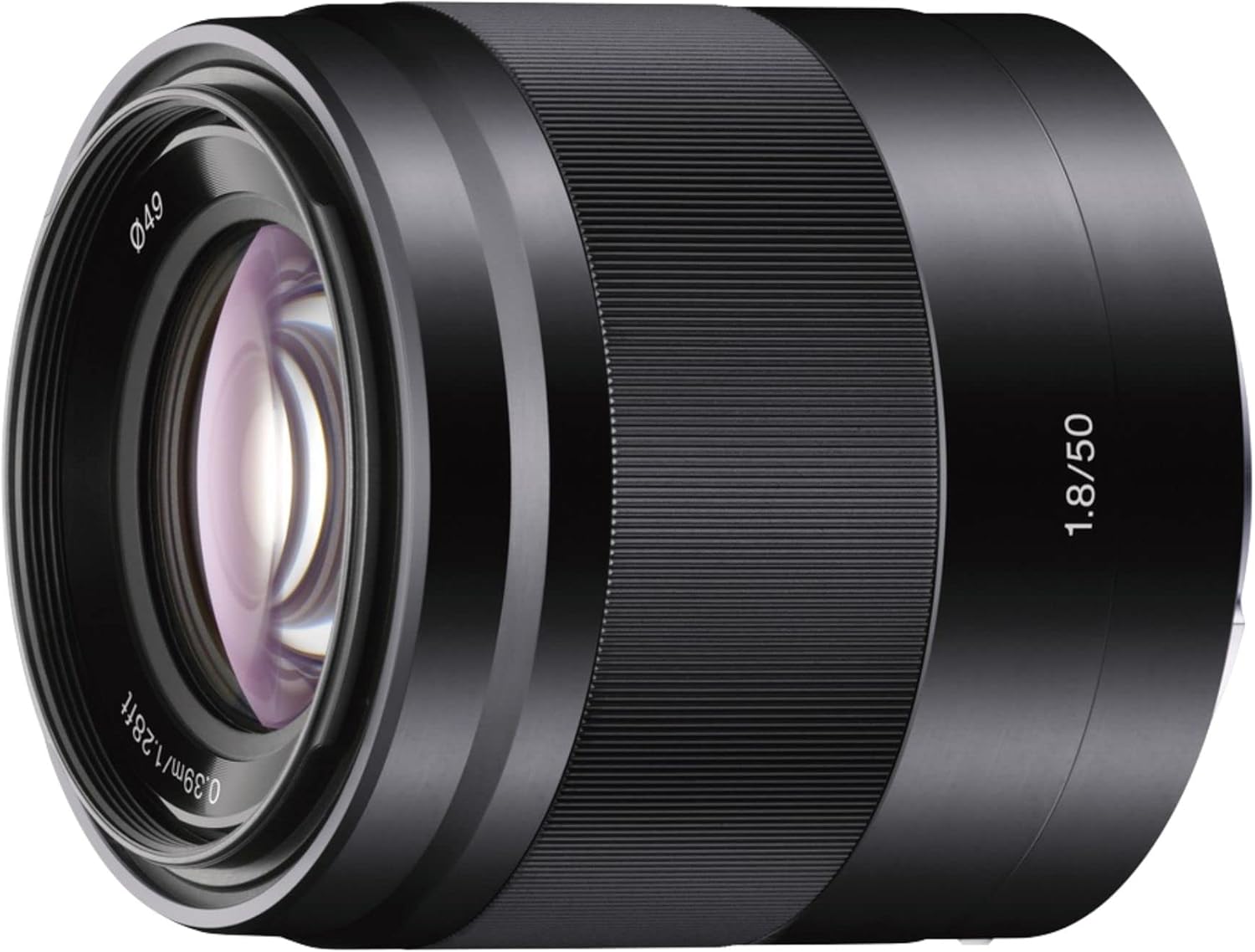
- CAPTURE LOW‑LIGHT SCENES WITH F1.8 APERTURE
- ACHIEVE SHARP IMAGES USING OSS STABILIZATION
- CREATE BEAUTIFUL DEFOCUS WITH 7‑BLADE APERTURE
- FOCUS CLOSE UP AT 1.28 FT DISTANCE
- SHOOT VIDEO SMOOTHLY WITH 4‑STOP STABILIZATION
Cons
- LIMITED TO APS‑C SENSOR COVERAGE
- NO AUTOFOCUS ON FULL‑FRAME BODIES
Expand details⌄
Detailed Review
The Sony E 50mm F1.8 OSS Portrait Lens fuses a fast f1.8 aperture with a built‑in OSS stabilizer in a compact aluminum prime, a combination rarely found in affordable mid‑range glass. This pairing lets a buyer capture bright, low‑light scenes while maintaining sharp, blur‑free results without carrying a heavy rig.
The 7‑blade circular aperture creates creamy defocus effects ideal for portrait work, while the 1.28 ft minimum focus distance and 0.16x magnification let the lens approach subjects closely. The 32° angle of view on APS‑C bodies frames a natural perspective, and the 49 mm filter thread keeps accessory costs modest. The supplied hood and caps protect the glass for everyday use.
However, the lens is limited to APS‑C sensor coverage, so full‑frame shooters must consider compatibility. The lack of autofocus on full‑frame bodies further narrows its appeal. Buyers who prioritize compact, low‑light friendly portrait shooting on APS‑C cameras will find this lens suits their workflow and delivers consistent performance.

Pros
- Capture Ultra Sharp Images With 8K Resolution
- Focus Silently With STM Motor For Quiet Shooting
- Create Creamy Backgrounds Using F1.8 Aperture
Cons
- No built in image stabilization
- Limited to Canon EF mounts only
Expand details⌄
Detailed Review
The Meike 85mm F1.8 SE Mark II STM AF lens is a rare hybrid that pairs an STM motor with a micro‑type‑C upgrade port, offering silent focusing and future‑proof firmware updates. Its 85mm focal length and 7‑group, 11‑element design provide a natural perspective with minimal distortion, ideal for portrait, architectural and landscape work. Compatibility spans a wide range of Canon EF DSLRs, from entry‑level Rebels to full‑frame 5D and 6D series.
The autofocus system leverages an STM stepping motor to deliver smooth, nearly silent operation, supporting electronic aperture adjustment and full EXIF data transmission. A minimum focus distance of 0.65 m and a maximum magnification of 0.17× enable tight close‑ups while retaining the classic portrait perspective. The micro‑type‑C interface allows online firmware upgrades, keeping the lens current over time.
The lens shines at F1.8, producing a creamy background blur that separates subjects from their surroundings, complemented by an angle of view of 27.8° diagonal, 23.4° horizontal and 10.8° vertical. While the high‑resolution optical design reaches 8K overall and 10K in the central area, the absence of built‑in image stabilization and the restriction to Canon EF mounts may limit its appeal for some users. It suits portrait photographers who prioritize resolution and quiet focus.
Side by Side Specs for Each Lens
The table shows that four of the five lenses share a bright F1.8 maximum aperture, so the real differences come down to mount and focusing style. Shooters who work in dim rooms often start with prime lenses for low light. The 50mm Sony sits wider on the frame, which suits tighter spaces and environmental shots.
Look at the focus distance and autofocus rows if you plan to shoot close-ups or video. Those details will tell you more about daily use than the aperture alone.
| Product | Focal length and aperture | Autofocus | Mount | Stabilization | Minimum focus distance |
|---|---|---|---|---|---|
| Meike 85mm F1.8 Pro | 85mm F1.8 | STM with Eye AF | Nikon Z | None built in | — |
| Meike 85mm F1.8 II | 85mm F1.8 | STM autofocus | Canon EF | None built in | — |
| Lightdow 85mm F1.8 MF | 85mm F1.8 | Manual focus only | Canon EF | None built in | — |
| Sony E 50mm F1.8 | 50mm F1.8 | Not listed | Sony E | Optical SteadyShot | 1.28 ft (0.39 m) |
| Meike 85mm F1.8 SE Mark II | 85mm F1.8 | STM autofocus | Canon EF | None built in | 0.65 m |
What to Check Before Buying Your Next Lens
Start with your camera mount, because a lens that doesn’t fit your body is no use at all. Then think about how you like to focus, how close you like to get, and whether video matters to you.
Mount and Camera System
This matters the moment you open the box, since the mount decides whether the lens connects to your camera at all. Nikon Z bodies need a Z mount lens, while Canon DSLRs need EF mount glass. The Meike Pro is made for Nikon Z cameras, and the other four are built for Canon EF or Sony E.
Check the compatibility list against your exact body before ordering. Some lenses also work on newer mirrorless bodies with an adapter, which can open up options you already own.
If you shoot Canon DSLRs, both Meike 85mm F1.8 models and the Lightdow lens will fit your setup. The Sony 50mm is the one to pick if you’re already in the Sony E system.
Focal Length and Aperture
Focal length controls how much of the scene you fit in and how far you stand from your subject. An 85mm lens is a classic choice for head and shoulders shots, since it compresses the face in a flattering way. The 50mm gives you a wider view and works better when you need more of the surroundings in frame.
An F1.8 maximum aperture lets in plenty of light and produces soft backgrounds. Lower the aperture to get more of your subject in focus at the same distance. Keep this in mind when you’re shooting in dim rooms, and compare the best lenses for photography for low light.
The Meike 85mm lenses and the Lightdow lens all sit at F1.8. The Sony 50mm also offers F1.8, so it will blur backgrounds similarly but from a wider field of view.
Autofocus Versus Manual Focus
Autofocus saves you time when your subject moves or when you’re working fast. Manual focus gives you total control over where the sharp zone lands, which many shooters enjoy for careful, deliberate work. Your choice here shapes the whole shooting experience.
Look for STM or similar motors if you want quiet, smooth focusing for video. The Lightdow lens has no autofocus, so you’ll adjust focus with the ring and set exposure yourself. Its learning curve is steeper but rewarding.
If you want autofocus with eye detection, the Meike Pro fits that need. Shooters who mainly work with a lens they focus by hand will likely be happy with the Lightdow.
Stabilization and Focus Distance
Stabilization helps keep handheld shots sharp in low light or at slower shutter speeds. Focus distance tells you how close you can get before the lens stops focusing. Both details matter if you shoot tight headshots or detail work.
The Sony 50mm has built-in optical stabilization and a close focus distance of 1.28 ft. Several of the Meike and Lightdow lenses don’t list built-in stabilization, so you may want a stabilized camera body or a gimbal for handheld work.
The Meike SE Mark II lists a minimum focus distance of 0.65 m, which suits tighter framing. If you shoot lots of close-ups, check those numbers against how close you normally stand.
Which Pick Fits Your Camera and Shooting Style
Choose the lens that matches your mount first, then narrow it down by how you like to focus. Each pick below suits a different kind of shooter, and you can see more options in best camera lenses for different needs.
Read the reasons carefully, because the right lens for one setup can be the wrong one for another.
Nikon Z autofocus: Meike 85mm F1.8 Pro AF STM Full Frame: This suits you if you shoot Nikon Z bodies and want fast, quiet autofocus with eye tracking for portraits and video. It also has an adjustable aperture ring that makes video work easier. If you shoot Canon DSLRs or Sony E, pick another lens from this list.
Canon EF everyday shooting: Meike 85mm F1.8 II Portrait Lens for Canon: This works well if you have a Canon DSLR or an EF body with an adapter and want reliable STM autofocus with a classic 85mm view. It’s a practical choice for headshots, weddings, and general shooting. If you need built-in stabilization or a Sony or Nikon mount, look elsewhere.
Manual focus creative work: EF 85mm f1.8 Portrait Lens: This fits you if you enjoy setting focus by hand and want a lens that teaches you exposure and focus control. It’s a good match for slow, intentional portrait work on Canon DSLRs. If you rely on autofocus for fast subjects or video, choose one of the autofocus lenses instead.
Common Questions About Choosing a Lens
Will a Canon EF lens work on my mirrorless body?
Yes, most Canon EF lenses work on Canon EOS R-series bodies with an EF to RF adapter. The Meike 85mm F1.8 II lists this use directly in its details. Check that your body and adapter are compatible before you buy.
Which lens is best for shooting video with smooth focus?
The Meike 85mm F1.8 Pro and Meike 85mm F1.8 II both use STM motors for quiet, smooth autofocus. The Pro also has an adjustable aperture ring that helps when you change depth of field during a take. The Lightdow lens doesn’t offer autofocus, so it suits slower, manual setups better.
Do I need a stabilizer with an 85mm lens?
Not always, but stabilization helps with handheld shots in low light. The Meike Pro can be paired with a stabilizer, and the Sony 50mm has built-in optical stabilization. If you shoot mostly on a tripod or in bright light, you may not need one.
Is the 50mm or the 85mm better for portraits?
The 85mm gives you a more flattering compression for headshots and close framing from a comfortable distance. The 50mm is wider and works well when you want more of the setting in the shot. Choose based on how far you like to stand from your subject.


