Shopping for Best Mirrorless Cameras can feel like drowning in spec sheets, and it’s easy to pay for features you’ll never touch. You want sharp photos and decent video without a steep learning curve. The good news is that the right camera usually depends on just a few things you already know about your shooting.
If you want an easy all-in-one kit for everyday shooting, travel, and vlogging, the Sony Alpha a6400 with the 16-50mm lens is a strong start. If you care most about low light, color, and full-frame detail for stills and serious video, the Sony Alpha 7 IV is built for that. If you’re a beginner who wants simple controls and vertical video for social posts, the Canon EOS R50 is the one to look at. If you’d rather skip lenses and settings altogether, best point and shoot cameras are a simple option worth comparing.
Five Sony and Canon Models Side by Side

Pros
- Capture Crisp Images at 24.2MP
- Record Oversampled Video with 4K Video
- Autofocus Subjects Instantly via Real-Time Eye AF
- Vlog with Tiltable Touchscreen at 180°
- Stabilize Handheld Shots Using Optical SteadyShot
Cons
- Limited Battery Life per Charge
- Requires Learning Curve for Advanced Features
Expand details⌄
Detailed Review
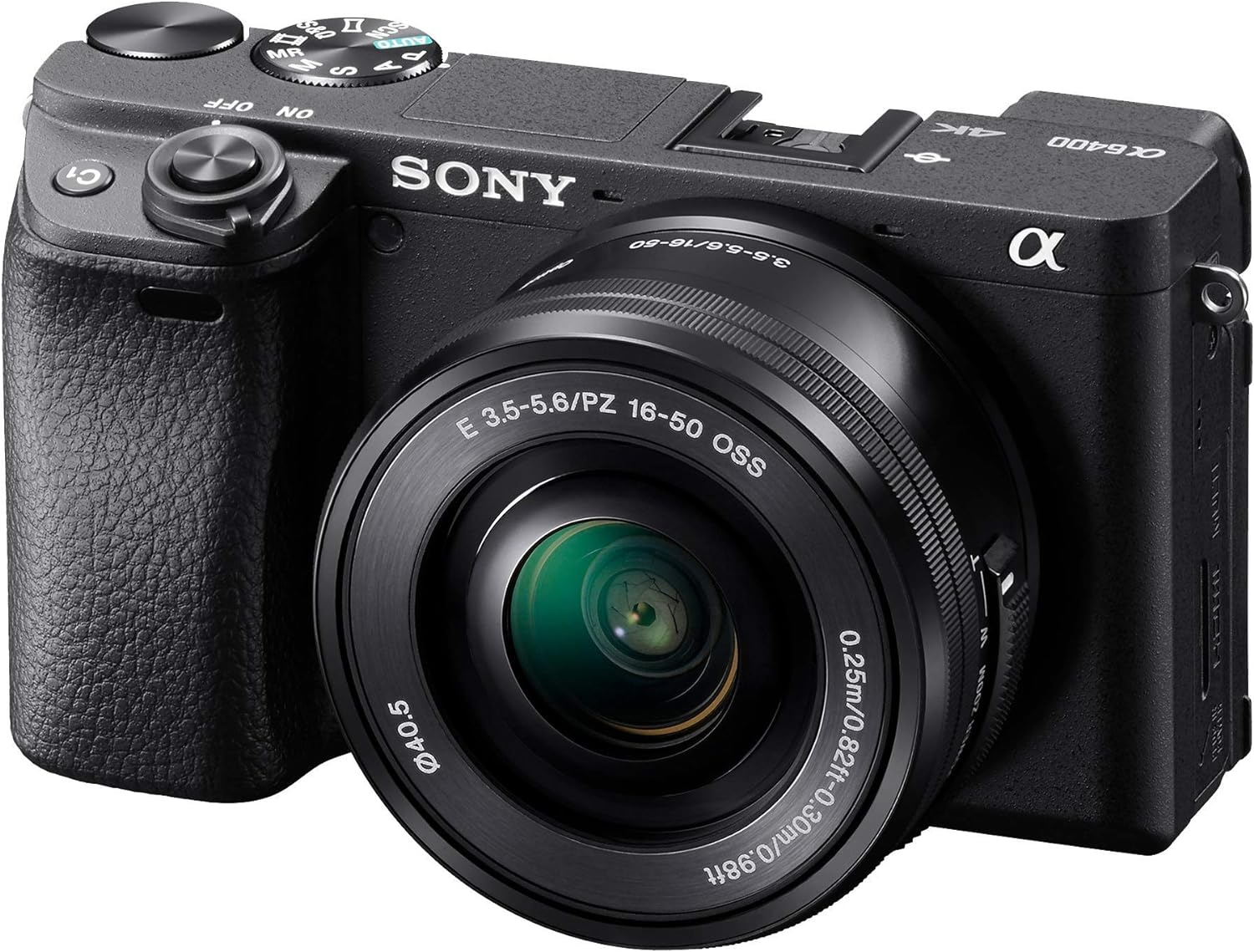
The Sony Alpha a6400’ Real‑Time Eye AF tracks subjects with the precision of a professional studio setup. The 24.2 MP APS‑C sensor and powerful processor deliver crisp detail and natural colors, while 4K video with full pixel readout provides sharp footage. This combination makes the kit suitable for vloggers and event photographers.
The bundled 16‑50mm OSS power zoom lens offers wide‑to‑standard coverage for travel and everyday scenes, and Optical SteadyShot keeps handheld shots steady. The 180° tiltable touchscreen simplifies framing for vlog style, while Wi‑Fi, NFC and Bluetooth let files transfer quickly to smartphones. A magnesium alloy body adds durability without adding bulk.
The kit includes two NP‑FW50 batteries, two 64GB Extreme PRO cards, and a range of accessories such as a deluxe soft case, 12‑inch flexible tripod, and cleaning kit, which together support extended shooting sessions. Photo Video Art Suite adds basic editing tools, and the external charger keeps power management simple. This comprehensive bundle suits creators who need a ready‑to‑use solution for on‑the‑go content creation.

Pros
- Capture Stills With 33MP Sensor
- Record Video At 4K 60p
- Apply Color Grading With S-Cinetone
Cons
- Battery Drains Quickly In Warm Conditions
- Operating Temperature Limits Extreme Weather Use
Expand details⌄
Detailed Review
The α7 IV’s 33MP full-frame sensor paired with the next‑generation BIONZ XR engine delivers crisp detail and fast handling for everyday shooting. Its operating temperature range of 0 to 40 °C ensures reliable performance in typical indoor and outdoor settings. The 8x more powerful BIONZ XR engine handles complex processing with minimal lag, while the back‑illuminated sensor captures clean images at low ISO.
For video creators the camera offers up to 4K 60p 10‑bit 4:2:2 recording with full‑pixel readout, and 7K oversampling produces smoother full‑frame 4K 30p footage. The built‑in S‑Cinetone profile adds cinematic color without extra editing. The 10‑bit depth and 4:2:2 sampling give creators flexible post‑production grading, and the camera’s built‑in streaming features support real‑time content sharing.
The hybrid design means a single body can replace both a high‑resolution stills camera and a consumer‑grade video camera, simplifying workflow for live streaming and real‑time sharing. This integration makes the α7 IV a practical all‑in‑one solution for content creators who value versatility. The versatile power‑input rating of 100‑240 V supports worldwide travel, while the all‑in‑one design removes the need for carrying both a stills and a video camera.

Pros
- Capture Wide Shots With 18‑45mm Lens
- Record Smooth 4K Video With Dual Pixel AF
- Create Vertical Content Using In‑Camera Guides
- Share Social Posts Via Built‑In Tools
- Track Faces And Eyes With Autofocus System
Cons
- Fixed lens limits focal flexibility
Expand details⌄
Detailed Review
The EOS R50 arrives as a complete kit, pairing the Canon EOS R50 Mirrorless Camera with an 18‑45mm lens and the model number 5811C012, so there’s no need to purchase accessories separately. The versatile 18‑45mm lens covers wide to standard focal lengths, making it ideal for daily content, portraits, and street shooting without swapping optics.
Oversampled 4K video paired with Dual Pixel AF delivers sharp, smooth footage, while reliable subject tracking and face/eye detection keep creators in control. The autofocus system built for creators reduces manual adjustments, ensuring consistent focus during fast‑moving scenes and smooth playback, which is especially helpful for vloggers and event shooters.
Creative Assist and vertical video features include in‑camera guides and social‑ready tools, letting users produce platform‑optimized content instantly. The built‑in vertical shooting aligns with modern social media formats, while the guide system lowers the learning curve for beginners. This all‑in‑one approach makes the EOS R50 a practical choice for everyday creators who want professional results without extra software.
Pros
- CAPTURE SUBJECTS WITH 425 PHASE DETECTION POINTS
- SHOOT FAST WITH RAPID CONTINUOUS SHOOTING
- CREATE TIME LAPSE VIDEOS WITH 4K VIDEO
- VLOG EASILY WITH TILTABLE LCD SCREEN
- PRODUCE SHARP IMAGES WITH 20.1MP HIGH RESOLUTION SENSOR
Cons
- OPERATING TEMPERATURE RANGE MAY RESTRICT USE
- COMPACT SIZE MAY LIMIT LENS OPTIONS
Expand details⌄
Detailed Review
The Sony Alpha a6400’s stacked 1‑inch sensor and 425‑point autofocus system set a new benchmark for compact interchangeable‑lens cameras. The 20.1MP resolution works well in low light, and the high density of phase‑detect points over 84 percent of the sensor ensures subjects stay sharp during rapid action. Real‑time eye tracking makes portrait sessions effortless, as the camera continuously locks onto eyes without manual intervention.
The 24‑70mm F1.8‑2.8 ZEISS Vario‑Sonnar T lens offers versatile focal lengths for wide scenes and tighter shots, while the flip screen lets creators frame themselves for vloggers or monitor angles. Continuous shooting reaches up to 11 fps at 24.2MP raw, suiting fast action subjects that need crisp colors. 4K video with built‑in time‑lapse and slow‑motion removes post‑processing, delivering ready‑to‑use footage.
The operating temperature range of 0‑40°C works well in typical indoor and mild outdoor settings, though extreme conditions may limit use. The compact body and E‑mount compatibility expand lens options without bulk, making it a versatile tool for photographers and videographers. Overall, the a6400’s high‑speed autofocus, 4K video, and tiltable display suit content creators who value flexibility and quality.

Pros
- Capture Sharp Images With 24.2MP Sensor
- Record 4K Video With Oversampled Sensor
- Track Eyes Quickly With Real‑Time Eye AF
- Shoot Fast Action Up To 10fps
- Stabilize Shots With 5‑Axis In‑Body IS
Cons
- Limited Battery Life For Heavy Use
- Cleaning Accessories Add Overall Weight
Expand details⌄
Detailed Review
The Sony Alpha 7 III brings a 24.2MP full‑frame sensor and BIONZ X processor to the table, delivering rich dynamic range and true‑to‑life colors that suit landscape, portrait, Possibly professional work. The built‑in 28‑70mm lens removes the need for extra glass, making the kit travel‑ready and streamlining the workflow for creators who capture both stills and video.
Autofocus performance shines with 693 phase‑detection and 425 contrast‑detection points, while Real‑time Eye AF tracks people and pets with precision, suiting wedding, wildlife, and portrait shooters. The 5‑axis in‑body stabilization, silent shutter, and 10fps burst capture enable crisp handheld action, and dual SD slots plus a high‑capacity NP‑FZ100 battery extend shooting sessions.
Video capabilities match the stills quality with oversampled 4K recording, S‑Log3 and HLG for color grading, and Full HD 120fps slow‑motion for storytelling. The compact system includes a padded case, cleaning kit, and an SD card reader, reducing the need for extra accessories. This all‑in‑one approach makes the Alpha 7 III a dependable choice for creators who want a single camera for diverse projects.
How These Five Cameras Stack Up on Specs
The table shows a clear split between APS-C bodies and full-frame bodies. The Sony a6400 models and the Canon EOS R50 keep things compact, while the a7 III and a7 IV step up in sensor size and cost more to own. If you want something even smaller, browse best compact digital cameras for pocket-sized options.
Video specs are where the models really separate. The a6400 kit and the a7 III both offer log profiles for color grading, while the a7 IV pushes the highest 4K frame rate and bit depth in this group.
| Product | Sensor | Video | Screen | Stabilization | Kit Lens |
|---|---|---|---|---|---|
| Sony a6400 Kit | 24.2MP APS-C | 4K, S-Log, HLG | 180° tilt touchscreen | Optical SteadyShot | 16-50mm OSS |
| Sony Alpha 7 IV | 33MP full-frame | 4K 60p 10-bit 4:2:2 | — | — | — |
| Canon EOS R50 | — | Oversampled 4K | — | — | 18-45mm |
| Sony a6400 Flip Screen | 20.1MP 1-inch stacked | Time-lapse and slow motion | Tiltable LCD | — | 24-70mm F1.8-2.8 |
| Sony Alpha 7 III | 24.2MP full-frame | Oversampled 4K, S-Log3 | — | 5-axis in-body | 28-70mm |
Four Things to Weigh Before You Buy
Most of the choice comes down to sensor size, video needs, how you’ll frame shots, and what you get in the box. Work through these four factors and the shortlist gets much shorter.
Sensor Size and What It Means for Your Photos
Sensor size shapes how much light the camera gathers and how much depth of field you can control. APS-C sensors like the a6400 and EOS R50 keep bodies and lenses smaller and lighter. Full-frame sensors like the a7 III and a7 IV give you more low-light room and a shallower look for portraits, so they suit you if image quality is the priority.
The 1-inch sensor in the a6400 flip screen model is smaller than full-frame but larger than many compact cameras. It works well if you want a pocketable camera with a fast zoom lens. Think of it as a middle ground for travel photos.
If you mostly shoot daylight snapshots and social content, an APS-C body will look great and cost less to carry. If you shoot dim weddings or want very clean files for big prints, step up to full-frame.
Video Features That Actually Matter
Look for oversampled 4K, since it usually looks sharper than cropped or pixel-binned video. Log profiles like S-Log2 or S-Log3 give you flexible footage for color grading, but they take more editing time. Frame rate and bit depth matter most for slow motion and detailed color work.
The Sony a6400 kit and a7 III both support S-Log and HLG, so they suit creators who edit their footage. The Sony a7 IV adds 10-bit 4:2:2 at up to 60p, which is a real step up for demanding projects. The Canon EOS R50 covers solid everyday 4K and is a simpler fit for casual clips.
If you only shoot short social videos, you won’t need log profiles at all. Save your budget for a better microphone or a lens instead.
Screens and Vlogging Setups
A tilting or flipping screen lets you see yourself while you record and makes low or high angles easier. A fully articulating or flip screen is handy for selfie-style vlogs, and you can compare flip-screen cameras for selfies to see which fit. A fixed screen works fine for stills but gives you less flexibility.
The a6400 kit has a 180-degree tiltable touchscreen that’s great for vlogging and live streaming. The a6400 flip screen model has a tiltable LCD, which suits both stills and video. The a7 IV and a7 III don’t list a tilting screen in the details here, so check that if you plan to film yourself.
If you’re a talking-head creator, prioritize the screen and an easy-to-use mic input over raw sensor size. A good screen will save you more frustration than extra megapixels.
Lens and Kit Value
Kit lenses give you a usable starting range, but they can limit you later. A zoom like the 16-50mm or 18-45mm covers everyday shooting well. Faster lenses like the 24-70mm F1.8-2.8 help in dim rooms and add creative blur.
The Sony a6400 kit comes with extra batteries, memory cards, and a filter kit, which saves you a few purchases. The a7 III bundle includes a padded case, cleaning gear, and a card reader. Both bundles make the first-day setup simpler.
If you already own Sony E-mount lenses, a body-only model may save you money. If you’re starting from zero, a bundle with a lens and accessories is usually the easier route.
Final Picks for Three Kinds of Shooters
Your right pick depends on whether you’re starting out, creating video, or chasing top image quality. Each of these three fits a different kind of shooter. Read the reasons below to see which one lines up with your plans.
Easy All-Rounder Kit: Sony Alpha a6400 Mirrorless Camera with 16-50mm Lens: This Sony a6400 bundle suits you if you want one camera for photos, vlogging, and travel with everything included. It has a 24.2MP APS-C sensor, a 180-degree tiltable touchscreen, and two batteries. If you need full-frame low-light performance or plan to shoot a lot of demanding video, pick the Sony Alpha 7 IV instead.
Full-Frame Detail: Sony Alpha 7 IV Full-frame Mirrorless Interchangeable Lens: The Sony Alpha 7 IV is for you if you want a 33MP full-frame sensor and 4K 60p with 10-bit 4:2:2 color. It’s a great match for serious photographers and video creators who grade their footage. If your budget is tight or you mainly shoot casual social clips, the Canon EOS R50 will feel more manageable.
Beginner Social Creator: Canon EOS R50 Mirrorless Camera with Economía Lens: The Canon EOS R50 suits you if you’re new to mirrorless and want simple controls, vertical video, and reliable autofocus for face and eye tracking. Its 18-45mm lens covers everyday shots well. If you need a tilting screen for vlogging or want a faster lens for dim scenes, look at the Sony a6400 models instead.
Common Questions About Choosing a Mirrorless Camera
Is a full-frame camera worth it over an APS-C model?
A full-frame camera is worth it if you shoot a lot in low light or want shallow depth of field for portraits. APS-C models like the a6400 and EOS R50 are smaller and lighter, which helps when you travel or carry gear all day. For casual photos and social content, an APS-C camera gives you plenty of quality for less bulk.
Do I need a camera with a flip or tilting screen?
You don’t need one for stills, but a tilting or flip screen makes vlogging, selfies, and low-angle shots much easier. The Sony a6400 kit and the a6400 flip screen model both have tilting screens. If you only shoot from eye level, a fixed screen will do the job fine.
What does oversampled 4K mean for my videos?
Oversampled 4K means the camera captures more detail from a larger area and scales it down, which usually looks sharper than basic 4K. It’s a good feature to look for if you plan to film talking heads, travel clips, or detailed scenes. Most casual shooters will notice the difference mainly on bigger screens.
Should I buy a kit with a lens or a body only?
A kit with a lens is easier if you’re starting from scratch because you can shoot right away. A body-only purchase makes sense if you already own compatible lenses or plan to buy a specific one. Bundles with extra batteries and memory cards can also save you a few separate purchases.